Most of us rely on our laptops every single day without giving much thought to what actually keeps them running, yet the question of whether you can use a laptop without its battery is more common than you might expect. Whether your battery has died, been removed for safety reasons, or simply worn out after years of use, understanding how your device behaves when powered solely by the mains can save you a good deal of frustration and even protect your hardware in the long run.
Key takeaways
- Most laptops can function without a battery if they are consistently connected to an AC power adapter.
- Operating without a battery poses a significant risk of data loss or system damage if the power supply is interrupted unexpectedly.
- Removing the battery turns a portable laptop into a stationary device, as it eliminates the safety net provided by a stored energy reserve.
- Not all laptop models support battery-free operation, as some manufacturers implement hardware safeguards that prevent the device from powering on without a battery.
- A battery serves as an essential insurance policy, providing enough time to save work and shut down properly during power failures.
- Emerging technologies like micro-energy harvesting and wireless power transfer could eventually make traditional chemical batteries obsolete.
- Future advancements in wireless information and power transfer may allow devices to receive energy and data simultaneously, supporting a more reliable and battery-free ecosystem.
Operating your laptop without a battery: the essentials
In most cases, a laptop can indeed function perfectly well without a battery installed, provided it remains connected to a power outlet at all times. This is because the machine simply draws its electricity directly from the AC power supply rather than from a stored charge. It is a bit like the shift we have already seen in wireless technology, where telephones moved from being tethered by cables to operating freely, hinting at a future where even battery-free devices might become commonplace.
How ac power enables battery-free laptop use
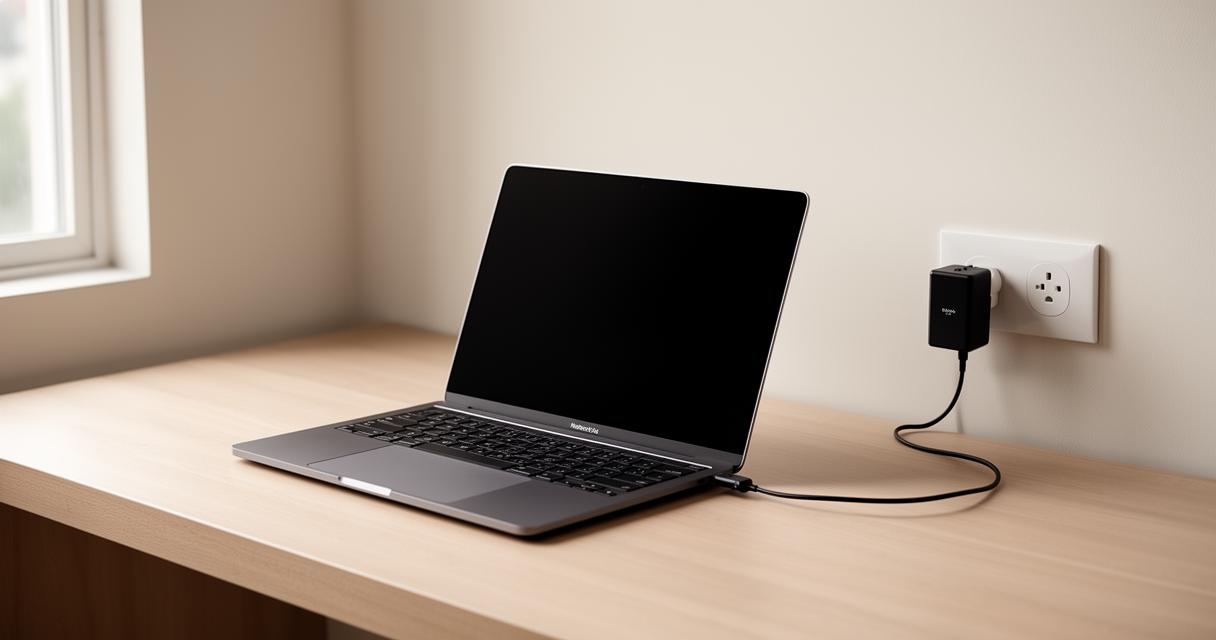
When a laptop has no battery fitted, the power adapter takes on the full responsibility of supplying energy to every component, from the processor to the screen. As long as the cable stays connected and the wall socket provides a steady current, the laptop should run just as it would with a fully charged battery inside. The main difference lies in the complete absence of any backup reserve, meaning the device becomes entirely dependent on that external connection.

Understanding the Risks of Sudden Power Interruptions
This is where caution becomes essential. Should the power supply be interrupted, even briefly, a laptop running without a battery will shut down immediately, without warning and without the chance to save your work. A tripped fuse, an accidentally unplugged cable, or a brief power cut could all lead to sudden data loss or, in worse cases, damage to files or the operating system. It is a stark reminder of how much we take stable power for granted, and why relying purely on ambient energy or mains electricity carries genuine risk in everyday use.
The Impact on Portability and Practical Considerations
One of the most obvious downsides of removing a laptop's battery is the loss of portability that defines these machines in the first place. A laptop tethered permanently to a wall socket essentially becomes a desktop computer, unable to move freely from room to room or be used during travel. For anyone who values the freedom that comes with mobile computing, this is a significant compromise.
Why a Functioning Battery Remains Crucial for Backup
Beyond portability, a working battery serves a quietly vital role as a safeguard against unexpected outages. Even a battery that no longer holds a full charge can provide those precious extra minutes needed to save documents and shut down safely during a power failure. For this reason, most technicians recommend keeping a functioning battery installed whenever possible, treating it as an insurance policy against the unpredictability of electrical supply.

Verifying your laptop's compatibility with battery-free operation
Not every laptop model is designed to operate without its battery, and some manufacturers build in safeguards that prevent the machine from powering on at all if no battery is detected. Before attempting to run a device this way, it is worth checking the manufacturer's guidance or consulting a professional, since forcing incompatible hardware to run without its battery could cause voltage irregularities or even damage sensitive components over time.
Future Battery Technology and What It Means for Laptop Users
Looking further ahead, the entire concept of battery dependency may eventually become obsolete. Researchers are exploring how miniaturisation and clever engineering could allow devices to draw power from their surroundings rather than from stored chemical energy, fundamentally changing how we think about portable electronics.
Emerging innovations in portable power solutions
Among the most promising developments is micro-energy harvesting, a technique that captures small amounts of ambient light, heat or even movement from the human body and converts it into usable electricity. Alongside this, wireless power transfer is gaining traction as a method of beaming energy directly to devices without any physical connection at all. Some researchers even suggest that future telecommunication networks, potentially built around 6G networks, could deliver power alongside data, keeping gadgets permanently charged without ever needing to plug in. Academics at Imperial College London are actively researching this area, focusing on what is known as WIPT, or wireless information and power transfer, a system designed to let devices simultaneously receive energy and transmit data through the same wireless connection.
How advanced battery tech will transform device reliability
Should these innovations mature, the implications for the Internet of Things could be enormous, freeing manufacturers from the constraints of battery size and reducing the environmental toll associated with disposable power cells. This shift could also reduce reliance on energy storage altogether, paving the way toward what some researchers describe as an Internet of Everything, where countless connected sensors operate continuously without ever needing a charge. Yet this vision is not without its complications, since existing power grids may lack the transmission capacity to support widespread wireless charging, and there are legitimate ethical considerations surrounding environments saturated with always-on sensor technology. There is also growing interest in how such systems might eventually intersect with fields like quantum computing, adding further complexity to an already fascinating area of research. For those keen to explore these ideas further, resources such as Imperial Tech Foresight offer valuable insight, alongside opportunities to engage directly with the academic experts driving this sustainable technology forward, ultimately reshaping device autonomy as we currently understand it.